Routing Strategies & Feature Modeling
Cost-Aware Routing Strategies & Models
1. Feature Engineering (54 Features)
The routing engine extracts 54 computationally inexpensive features prior to invoking any LLM:
- OCR Confidence Metrics: Mean confidence, minimum token confidence, standard deviation, count of low-confidence tokens (<80%, <50%).
- Lexical & Linguistic Features: Out-of-vocabulary (OOV) ratio against historical lexicon, archaic character frequency (e.g.
ſ,œ, ligature anomalies). - Statistical Text Metrics: Punctuation density, digit-to-letter ratios, average word length, uppercase token anomalies.
- Layout Context: Bounding box coordinates, line height variance, bounding box density.
2. Evaluated Router Models
The router was benchmarked across multiple learning paradigms:
- Lasso Regression (L1): Sparse feature selection, highly interpretable, <0.1s inference time on single CPU core.
- Ridge Regression (L2): Smooth shrinkage across correlated confidence features.
- Support Vector Machines (SVM): Non-linear RBF kernel separating degradation clusters.
- Multi-Layer Perceptron (NN): 2-layer feedforward network predicting expected CER reduction.
- ConfBERT: Fine-tuned lightweight language model scoring token perplexity and error likelihood.
3. Results Summary
- Selective Efficiency: At \tau = 0, the Lasso router skips 40.2% of segments, reducing API costs by 38.5% while degrading final CER by only 0.20 percentage points (3.12% vs 2.92%).
- Oracle Tracking: The regression router achieves 91.4\% of the theoretical maximum gain achievable by an omniscient oracle.
Empirical Routing Curves & Threshold Analysis
Regression-Based Routing Performance
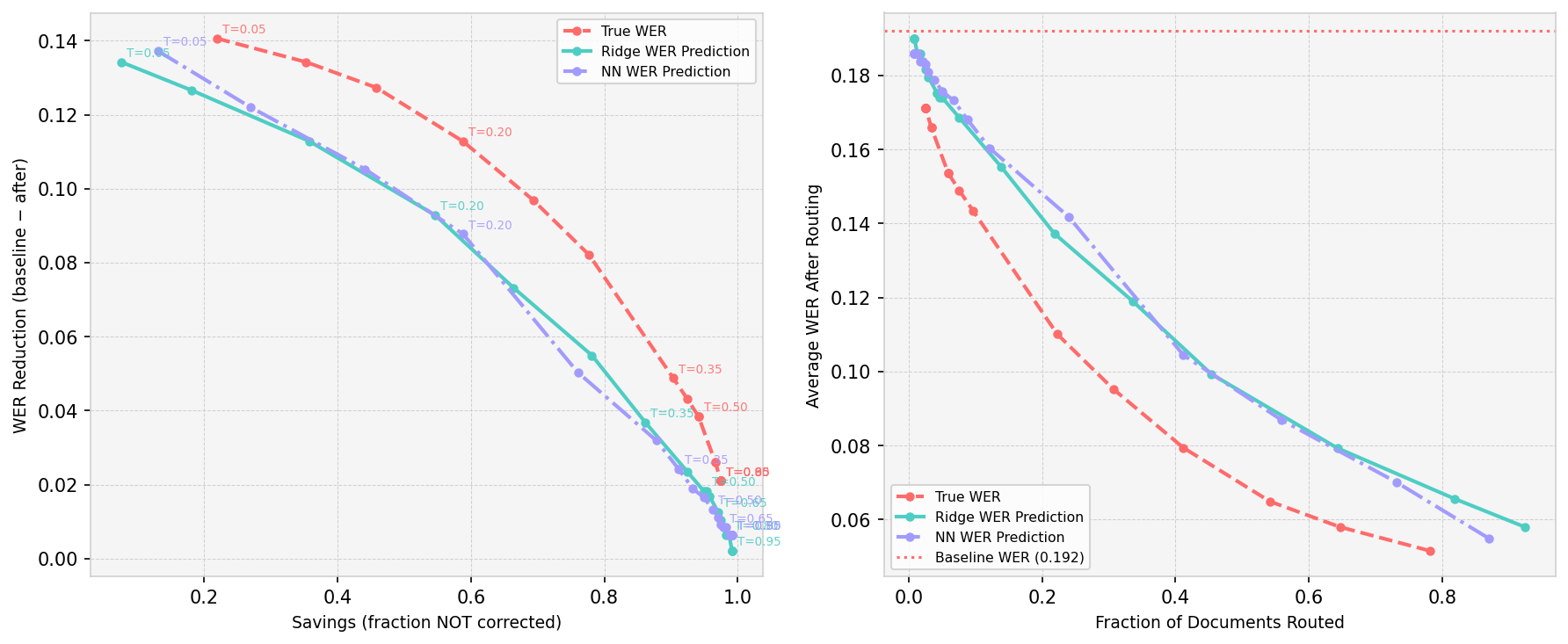
Figure 1: Cost vs accuracy trade-off curves for regression routing across prompt regimes.
Threshold Tuning & Boundary Optimization
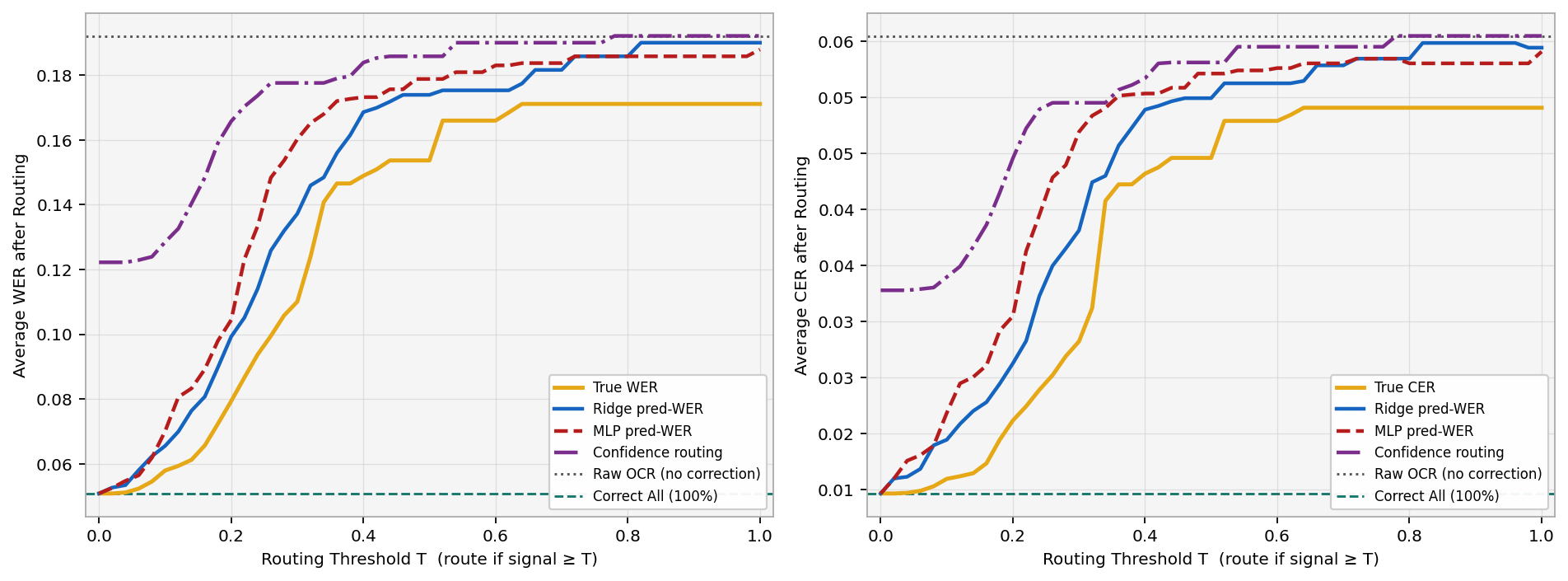
Figure 2: Optimal confidence threshold cutoffs minimizing inference cost while maximizing CER delta.